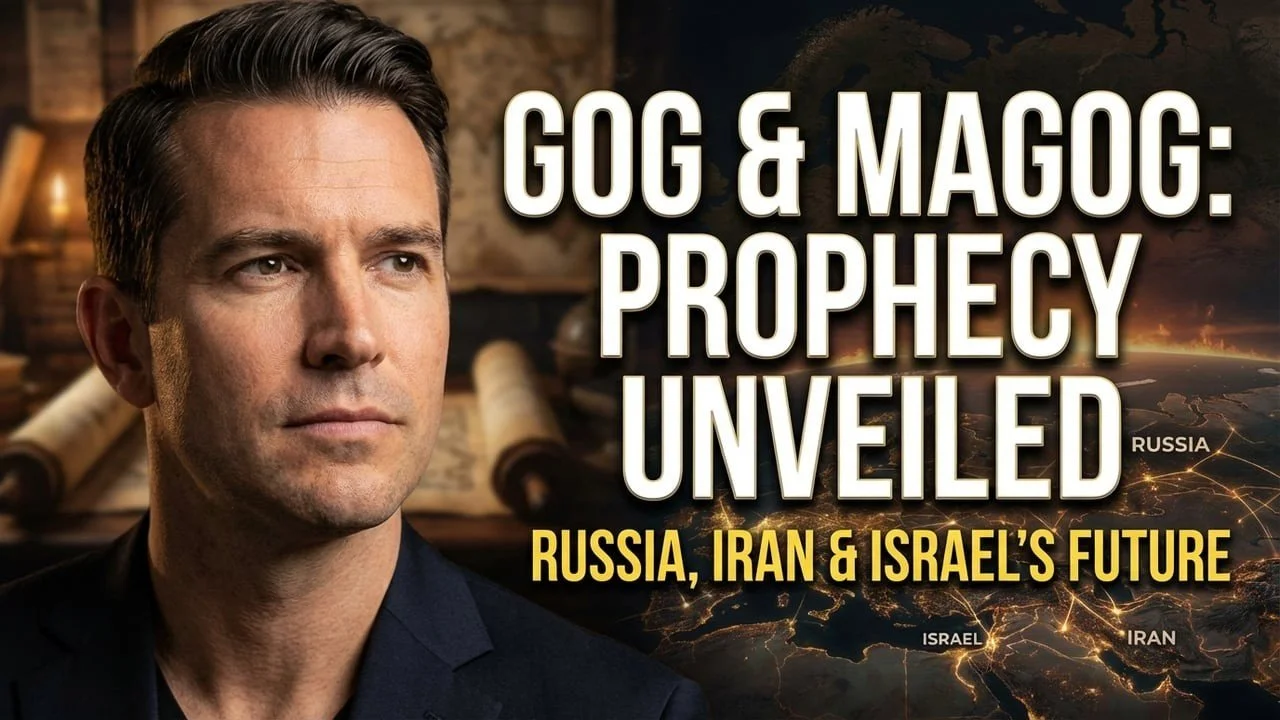
Russia, Iran, Israel, and the Prophecy of Ezekiel
We’re diving into one of the most debated topics in biblical prophecy: the ancient prediction of Gog and Magog.
Ezekiel 38–39 describes a future conflict involving Israel and a coalition of nations. Because the prophecy mentions ancient regions such as Persia, many believers today are asking whether modern events involving Russia, Iran, and Israel may be connected to Ezekiel’s vision.
This study is not written to stir fear or reckless speculation. It is written to help believers examine Scripture carefully, discern the times soberly, and place their hope in the Lord Jesus Christ.
EZEKIEL 38–39 | BIBLE STUDY
Watching Prophecy with Wisdom, Humility, and Hope
Introduction
The prophecy of Gog and Magog is one of the most discussed and debated passages in end-times Bible study. Ezekiel 38–39 describes a future conflict involving Gog, Magog, and a coalition of nations that comes against Israel.
Because Ezekiel names ancient peoples and regions—including Persia—many believers ask how these names may relate to modern nations and whether events involving Russia, Iran, and Israel should be viewed in light of this prophecy.
This study is not meant to produce fear or reckless speculation. It is meant to help believers read Scripture carefully, discern the times soberly, and place their confidence in the Lord who rules over every nation.
Study Passage
Primary Text: Ezekiel 38–39
Key Verse: “Thus will I magnify myself, and sanctify myself; and I will be known in the eyes of many nations.” — Ezekiel 38:23
1. God Rules Over the Nations
The prophecy begins with the Word of the Lord to Ezekiel. Before any nation moves, plots, invades, or threatens, God speaks.
That matters.
Ezekiel’s vision does not present history as random. It shows that even the movements of kings, armies, and empires remain under the sovereign authority of God. Nations may rage, but the Lord reigns.
Gog and Magog remind us that world events are not outside God’s control. The believer does not need to panic when the nations shake. We are called to watch, pray, and trust the God who sees the end from the beginning.
Biblical Foundation:
* Ezekiel 38:3 — “Behold, I am against thee, O Gog…”
* Proverbs 21:1 — “The king’s heart is in the hand of the Lord…”
* Psalm 2:1–4 — The nations rage, but the Lord sits enthroned.
Reflection Questions:
* When you see instability among the nations, do you respond first with fear, fascination, or prayer?
* How does God’s sovereignty change the way you read news about Israel, Russia, Iran, and the Middle East?
* Are you more focused on predicting events, or on being faithful to Christ in the time you have been given?
2. Gog and Magog Call Us to Careful Interpretation
Ezekiel names peoples and regions from the ancient world: Magog, Meshech, Tubal, Persia, Cush, Put, Gomer, and Togarmah. Some Bible teachers connect these names to modern geopolitical powers. Others caution against making one-to-one identifications too quickly.
A faithful Bible study should hold two convictions together:
First, we must take prophecy seriously.
Second, we must interpret prophecy humbly.
The goal is not to force Scripture into the latest headline. The goal is to let Scripture speak with authority, clarity, and weight. Current events may raise important questions, but the Bible—not the news cycle—must govern our interpretation.
Biblical Foundation:
* Ezekiel 38:5–6 — Persia, Cush, Put, Gomer, and Togarmah are named among the nations in the prophecy.
* 2 Timothy 2:15 — Believers are called to rightly divide the Word of truth.
* Acts 17:11 — The Bereans were commended because they searched the Scriptures daily.
Reflection Questions:
* Am I more eager to prove a headline than to understand the biblical text?
* What parts of Ezekiel 38–39 are clear from Scripture?
* What parts require humility, patience, and further study?
* How can Christians discuss prophecy with conviction without becoming arrogant or speculative?
3. Israel Remains Central in God’s Prophetic Purposes
Ezekiel’s prophecy repeatedly focuses on a coming conflict involving the land and people of Israel. Whatever interpretive view a believer holds about Gog and Magog, the text itself makes Israel central to the prophecy.
This does not mean Christians should respond with political simplification or careless assumptions. It means we should recognize that God’s covenant faithfulness, His holy name, and His purposes among the nations are deeply connected to the biblical story of Israel.
God’s ultimate purpose is not merely to defeat enemies. His purpose is to make Himself known.
Biblical Foundation:
* Ezekiel 38:16 — God says the nations will come against His land.
* Ezekiel 38:23 — “Thus will I magnify myself, and sanctify myself; and I will be known in the eyes of many nations…”
* Romans 11:29 — “For the gifts and calling of God are without repentance.”
Reflection Questions:
* How should Christians pray for Israel?
* How should Christians pray for the nations surrounding Israel?
* How can we care about biblical prophecy while remaining faithful to the Great Commission?
* Does your study of prophecy increase your love for the lost?
4. Prophecy Should Produce Watchfulness, Not Panic
Jesus never called His people to fear-driven speculation. He called them to watchfulness, prayer, endurance, holiness, and faithfulness.
Biblical prophecy is not given so believers can become obsessed with timelines. It is given to awaken us. It reminds us that history is moving toward the return of Christ, the judgment of evil, and the full revelation of God’s kingdom.
If our study of Gog and Magog makes us fearful, proud, angry, or distracted, we are missing the point. Prophecy should make us sober. It should make us prayerful. It should make us evangelistic. It should make us holy.
Biblical Foundation:
* Matthew 24:6 — “See that ye be not troubled…”
* Luke 21:28 — “Look up, and lift up your heads; for your redemption draweth nigh.”
* 1 Peter 4:7 — “Be ye therefore sober, and watch unto prayer.”
Reflection Questions:
* Does your study of prophecy make you more prayerful?
* Does it make you more serious about holiness?
* Does it make you more urgent about sharing the Gospel?
* Who in your life needs to hear the hope of Jesus Christ before it is too late?
Conclusion: Watch Without Fear
Gog and Magog should not lead believers into panic. It should lead us back to Scripture, prayer, holiness, and Gospel urgency.
The nations may rage, but the Lord reigns.
The future is not in the hands of Russia, Iran, Gog, Magog, or any earthly power. The future belongs to Jesus Christ.
Study prophecy seriously. Interpret it humbly. Watch the nations soberly. And above all, be ready to meet the Lord.
Closing Prayer:
Lord, teach us to read Your Word with reverence, humility, and courage. Keep us from fear, pride, and speculation. Help us watch the nations with sober minds and prayerful hearts. Strengthen our hope in Jesus Christ, the King of kings and Lord of lords. Make us faithful witnesses until the day He returns. Amen.
Commentary on Gog and Magog
Ezekiel’s prophecy of Gog and Magog has been studied, debated, and discussed for generations. Some interpreters connect Gog, Magog, Meshech, and Tubal with modern Russia or regions associated with the north. Others believe the passage points more broadly to a final coalition of nations opposed to God and His people.
The New Testament adds another layer of importance when Revelation 20 uses the names Gog and Magog in connection with a final rebellion after the millennium. This means the theme is not isolated to Ezekiel. It reaches into the larger biblical story of rebellion, judgment, and the final victory of God.
But the central message is clear: God will defend His name, accomplish His purposes, and make Himself known among the nations.
This is why Christians should study Gog and Magog carefully. Not to panic. Not to chase headlines. Not to build an identity around prediction. But to become watchful, sober, prayerful, and faithful.
The question is not only, “Is Russia about to fulfill Gog and Magog?”
The deeper question is:
Are we ready to meet the Lord?
DID THIS BLESS YOU?
If so, please consider making a generous monthly gift to support the work of Sermon Academy.
Your support helps us publish Gospel-centered teaching, create Bible studies, distribute sermons, and equip believers with resources they can watch, read, share, and return to for years.
✽ You help acquire and publish trusted Gospel sermons and Bible teaching.
✽ You help us edit, host, and deliver teaching consistently through email and video.
✽ You equip believers with biblical resources they can share with others.
✽ You help expand the reach of clear, Christ-centered teaching.
✽ You strengthen a growing library of sermons and studies for people seeking truth.
✽ Your gifts help more souls encounter the Word of God.
Giving FAQs
Can I trust SERMON ACADEMY?
Sermon Academy exists to preserve, publish, and distribute Gospel-centered teaching that helps believers grow in truth and share the hope of Jesus Christ. We are committed to stewardship, clarity, and faithfulness in the work entrusted to us.
Where does my money go?
Your gifts help support the mission, vision, purpose, and mandate of Sermon Academy and its parent organization. These expenses may include acquiring sermons, creating Bible studies, editing and hosting content, improving the website, distributing emails, producing videos, and expanding the reach of biblical teaching.
Is my gift tax deductible?
No. Sermon Academy is part of a for-profit organization, and gifts are not tax deductible.
Why monthly giving?
Monthly giving helps us plan, publish, and expand consistently. Steady support allows Sermon Academy to continue building a growing library of sermons, Bible studies, and Gospel-centered resources for people who need truth.